Build what lasts.
Not just businesses. The systems that shape our economic future.
I’m Gilles Nunjeh—an entrepreneur investigating one question:
How do communities build the capacity to shape their own economic future?
I explore the connections between entrepreneurship, ownership, supply chains, technology, and the institutions that shape how communities create and retain value.
Through books, real-world cases, conversations, and practical experiments, I document what I learn, what I question, and what still needs to be tested.
This isn’t a finished philosophy. It’s research, done in public.
Research, ideas, and practical experiments—shared as the inquiry develops.
Five connected areas of inquiry.
To understand how communities shape their economic future, I’m investigating the systems and relationships that influence what people can build together.
Entrepreneurship & Ownership
What changes when people move beyond selling their time to building and owning productive assets? I explore the relationship between entrepreneurship, ownership, and the ability to create lasting value.
Supply Chains & Local Economies
Businesses don’t operate in isolation. They buy, sell, distribute, produce, and depend on one another. I’m interested in how those relationships can strengthen—or constrain—a community’s economic capacity.
Institutions & Collective Organization
How do communities organize, make decisions, pool resources, resolve conflicts, and coordinate action? I examine the institutions and governance arrangements that make collective efforts possible.
Technology & Productive Capacity
Technology can change what people are able to produce, coordinate, and distribute. I investigate where tools and systems can lower barriers, expand capabilities, and help people turn ideas into practical outcomes.
Experiments & Real-World Evidence
Ideas are starting points, not proof. I look for ways to test hypotheses through business-building, case studies, and practical experiments—and document the limitations and lessons along the way.
Ideas worth examining.
Explore the books, cases, questions, and connections shaping The Builder’s Inquiry.
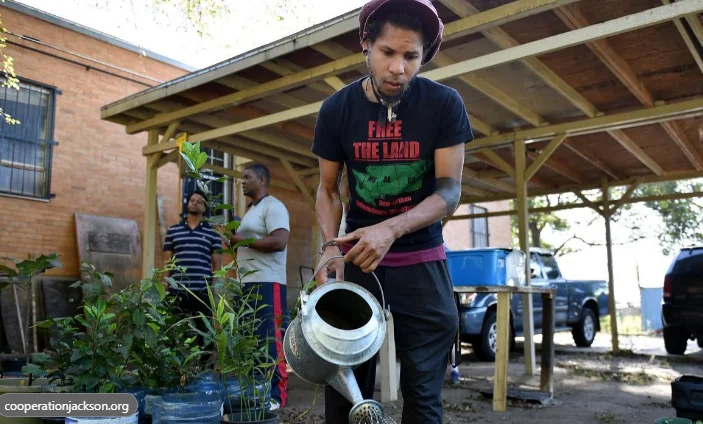
Jackson Rising: Building an Economy Through Cooperation
What can we learn from a community’s attempt to build economic power through cooperatives, ownership, and interconnected institutions?
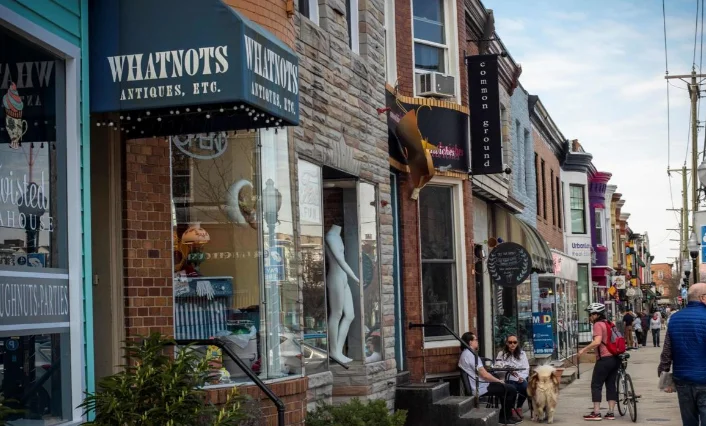
The Businesses Are There. So Why Doesn't the Community Control Its Economic Future?
Business activity doesn’t automatically translate into community economic agency. Explore the relationships among ownership, supply chains, institutions, and the capacity to shape economic outcomes.
A Manifesto for Economic Agency
What does it mean for a community to shape its own economic future? Explore the central question, working hypothesis, research principles, and invitation behind The Builder’s Inquiry.
An entrepreneur investigating what makes economic agency possible.
I’m Gilles Nunjeh—an entrepreneur interested in what makes businesses, communities, and institutions capable of creating lasting value.
My questions have expanded beyond how to start a business. I want to understand the systems around it: the ownership structures, supply chains, technologies, relationships, and institutions that influence what people can build together.
The Builder’s Inquiry is where I document that exploration. I read, investigate, connect ideas, build, and look for opportunities to test what I learn.

Read. Investigate. Connect. Test.
Read
Study books, sources, and research to understand how others explain the problem.
Investigate
Examine real-world communities, businesses, institutions, and economic arrangements.
Connect
Look for relationships between ideas, structures, and practical conditions. Treat these connections as interpretations to examine, not automatic proof.
Test
Where feasible, explore practical applications and document what happens, what remains uncertain, and what should be investigated next.
Research in public. Learning in the open.
I don’t believe every important question needs an immediate, confident answer.
Some ideas deserve to be challenged. Some models work in one setting and fail in another. Some promising theories only become useful when people try to apply them.
I’ll distinguish what a source says from what I think it means, what I suspect might work from what has actually been tested, and what I learn from what I still don’t know.
The aim is not to manufacture certainty. It’s to build a clearer understanding of how economic agency can be developed—and what it takes to put that understanding into practice.
Explore recent insights and articles.
Research notes, essays, case studies, and questions from the ongoing investigation.
The Businesses Are There. So Why Doesn't the Community Control Its Economic Future?
A community can have hardworking people, successful businesses, and unmet needs — and still struggle to shape its own economic future. Where the inquiry begins.
What Institutions Make Possible
Beyond individual businesses: what institutions actually do for a community’s economy — the mechanical version, not the inspiring one.
The Economy Between the Businesses
Every business sits inside a web of suppliers, lenders, workers, and rules. Mapping the hidden system where economic agency is won or lost.
Follow the Builder's Inquiry.
If you’re interested in building businesses, developing ownership, strengthening communities, or understanding the systems behind economic outcomes, follow the investigation.
On Substack, I’ll share research notes, essays, case studies, questions, and lessons from the work as it unfolds.
No finished doctrine. No promise of a universal blueprint. An ongoing inquiry into a question worth investigating.
Follow the research as it develops.
Let's talk about the work.
If you have a question about The Builder’s Inquiry, a case study to share, an idea to explore, or a potential collaboration connected to the work, I’d be glad to hear from you.